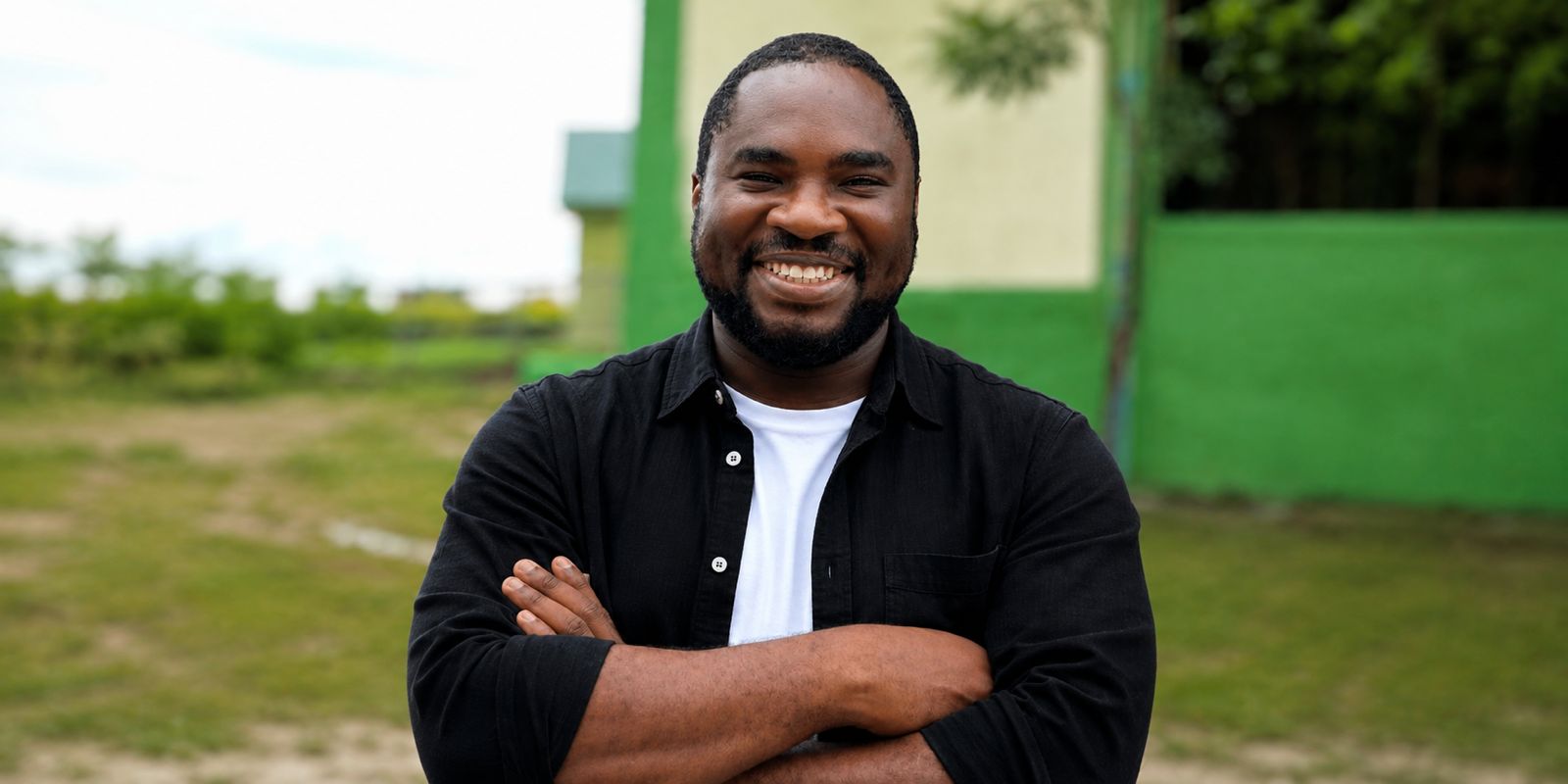
Oluwaseun Olorunmeye Daniel is the founder of Aiki Hub Technologies, a technology company focused on developing digital products and tools that solve practical problems. His work spans software, product development and the exploration of emerging technologies, including artificial intelligence. But his journey into technology and product building began long before Aiki Hub. As an undergraduate, he was already finding ways to turn his creative and technical skills into something useful.
Sometimes, the beginnings of a person’s work are visible long before they have a name for what they are building towards. In Oluwaseun’s case, the interest in creating things would take different forms over the years, but the instinct to make something useful kept returning.
He started Anielworks, a business through which he designed websites, created graphics and developed logos for companies. It was an opportunity to put his skills to work, serve clients and explore his interest in design. He continued this work over several years, building experience that would later become part of a broader journey into digital product development.
Oluwaseun studied Computer Science at Bowen University, a background that connects naturally with the work he does today. From his early days designing websites and graphics to building digital products through Aiki Hub Technologies, his journey has continued to bring him back to technology, this time with a focus on developing tools that solve practical problems.
There is something significant about those early years of making things for other people. Working on a client’s website or designing a logo requires more than knowing how to use a tool. It means understanding what someone needs, interpreting an idea and turning it into something they can use. Those are lessons that remain relevant when the work moves from delivering a service to building a product.
His professional journey has also taken him through organisations including the Nigerian Communications Satellite Limited (NIGCOMSAT), the National Social Safety Nets Coordinating Office (NASSCO) and FHI 360. These experiences form part of a career that has moved across different professional environments, alongside his continuing interests in technology and creativity.
But there is another side to Oluwaseun that might surprise anyone who knows him primarily through his work in technology. He is a musician who writes songs, sings and plays the guitar. He was part of The Isomers, a band through which he explored his interest in music and performance.
I find this combination interesting because it challenges the way we sometimes categorise people. We tend to think of technology as technical and music as creative, as though the two require entirely different kinds of minds. Yet both involve imagination, experimentation and the work of turning an idea into something others can experience. For Oluwaseun, music and technology are different expressions of his interests, rather than competing identities.
Perhaps that is one of the things that makes his journey worth looking at more closely. People are often introduced to us through a single role, the tech person, the musician, the entrepreneur. But behind those labels is a person whose interests and experiences may be shaping one another in ways that are not immediately obvious.
And the closer you look at Oluwaseun, the more you begin to notice a common thread running through these different parts of his life. He is a builder. Not simply because he develops software or runs a technology company, but because he seems to have a natural inclination to make things. If you find him with time on his hands, there is a good chance he is working on something. And when he is not building something for work, he may well be exploring an idea simply because it interests him. Building is not just a job he does; it is something he returns to, even in his own time.
His work also extends beyond business and personal creativity. He is a member of the Global Shapers Community and an active volunteer with Beyond the Classroom Foundation, supporting efforts to improve educational opportunities for children. These connections reflect another part of his journey: contributing to communities and causes beyond his immediate professional responsibilities.
That intersection of technology and service can also be seen in Voluserve, a digital platform built by Aiki Hub for The Service HQ. Voluserve connects people seeking volunteer opportunities with organisations looking for volunteers. By making opportunities easier to discover, the platform helps individuals find ways to contribute their time and skills while enabling organisations to connect with potential volunteers.
It is an example of how software development can support work beyond conventional business needs. Technology can create new ways for people to find jobs, manage tasks or communicate, but it can also help connect people with opportunities to serve. The purpose of a product depends on the problem it is designed to address and the people it is intended to help.
And this idea of using technology to address practical needs did not begin with the products he is developing today. There is an earlier story that takes us back to when he was just 16.
At that age, he developed a computer-controlled robotics project designed to perform minor household chores. The project earned him a gold medal at the International Computer Project Olympiad in Ashgabat, Turkmenistan.
That achievement stands out, but it is not the whole story. It offers an early glimpse of his interest in using technology to make things work in practical ways. In the years that followed, that interest would find expression through design, professional experience, music, volunteering and, eventually, digital product development.
Looking back at that robotics project alongside his current work, there is a thread worth noticing: the idea of using technology to do something useful. The tools have changed, and the problems he is exploring have become more varied, but the underlying question remains familiar, what can be built to make something easier or work better?
There is also something about the way he approaches problems that helps explain this instinct. When he encounters something that needs fixing, his first inclination is to look for a solution. Whether that solution could eventually become a business or generate revenue does not necessarily have to be the starting point. The immediate question is whether the thing can be fixed and whether what he builds can make a difference. For him, the possibility of solving a problem is reason enough to start exploring an idea.
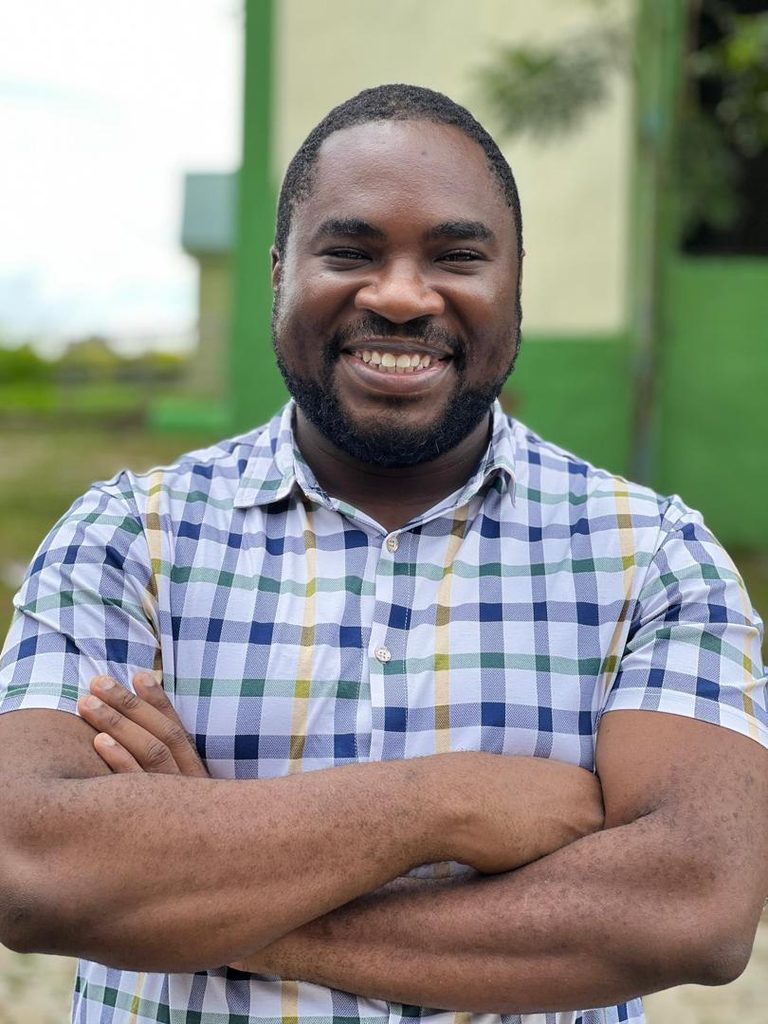
Today, through Aiki Hub Technologies, Oluwaseun is developing the company’s own digital products, including Cawenda and Aiki Flow. These are distinct from Voluserve, which Aiki Hub built for The Service HQ, and each addresses a different everyday need.
Cawenda is designed for people who spend long hours working on computers. It encourages them to take intermittent breaks throughout the day, with options for two, five or ten minutes. The prompts encourage users to stand up, walk away from their computers and engage in simple activities that give their eyes a break from the screen.
It addresses a familiar problem in modern work: becoming so absorbed in what is happening on a computer that taking a break slips down the list of priorities. For people whose work requires hours in front of a screen, a reminder to pause can encourage a healthier rhythm throughout the day.
Aiki Flow approaches everyday work from another angle. It allows users to record their voices directly on their computers and convert speech into text. For people who prefer speaking to typing, want to capture ideas quickly or need to turn spoken thoughts into written material, it offers another way to get their ideas onto the page.
Although Cawenda and Aiki Flow serve different purposes, they share a practical starting point: recognising a need and exploring how technology can help address it. One encourages people to step away from their screens; the other helps them capture their thoughts without relying entirely on a keyboard. Neither requires an extraordinary problem to be useful. Sometimes, the most relevant products are those that respond to challenges people encounter every day.
This practical approach also provides a useful way to think about the growing interest in artificial intelligence. The conversation can sometimes become so focused on what AI might do in the future that we overlook the more immediate question of how emerging technologies can be applied to real needs.
This is also where the possibilities of artificial intelligence become relevant to the broader work of building digital products. AI is changing how people create, communicate, process information and approach everyday tasks. For technology builders, it presents opportunities to learn new tools, experiment with different approaches and explore solutions that might previously have been more difficult to develop.
As Oluwaseun continues to work across software and digital product development, AI forms part of the wider technological landscape he can explore. The point is not to adopt a technology simply because it is attracting attention, but to understand where it can be useful and how it might help solve a real problem. That takes curiosity, continuous learning and a willingness to test ideas and improve them over time.
Looking at his journey, what stands out is the range of experiences he has gathered along the way. There is the undergraduate who designed websites and graphics for companies, the Computer Science graduate applying his technical background, the teenager who developed a robotics project, the musician who writes and performs songs, the professional who has worked across different organisations, and the product builder developing digital tools while exploring emerging technologies.
These experiences do not have to fit into a single professional label. They provide different perspectives and opportunities to learn. His creative interests, technical work and involvement in community service form part of a broader story about someone who has continued to explore different ways to apply his abilities.
There is also a distinction worth making between building products for others and developing products of your own. Through Voluserve, Aiki Hub has helped bring a digital platform to life for The Service HQ. With Cawenda and Aiki Flow, the company is developing its own products. The work may draw on similar technical capabilities, but each path comes with different questions about the people being served, the problems being solved and the value a product needs to deliver.
For Oluwaseun, building has taken different forms over the years. It began with design work as an undergraduate, extended into professional and creative pursuits, and now includes developing digital products and exploring the possibilities of AI. Alongside these interests, his involvement in volunteering has connected him to work that serves communities and expands educational opportunities for children.
His journey is a reminder that a person’s abilities do not always have to lead to one fixed destination. Skills developed in one area can inform work in another. Interests can evolve, new technologies can open up new possibilities, and experience can create the foundation for ideas that were not part of the original plan.
At Aiki Hub Technologies, Oluwaseun continues to develop the company’s own products while helping others bring digital solutions to life. His work today is different from the website and graphic design projects he took on as an undergraduate, but both reflect a continuing willingness to explore ideas and turn them into something tangible.
And perhaps that is what becomes clearest the longer you follow his story. The businesses, the projects, the software and even the interests that seem to sit outside technology are all parts of a bigger picture. At the heart of it is someone who is always looking for something to build, something to improve or a problem he can solve.
He is a builder who keeps building, not because he is limited to one craft, but because he continues to find new problems to solve, new ideas to explore and new possibilities worth bringing to life.