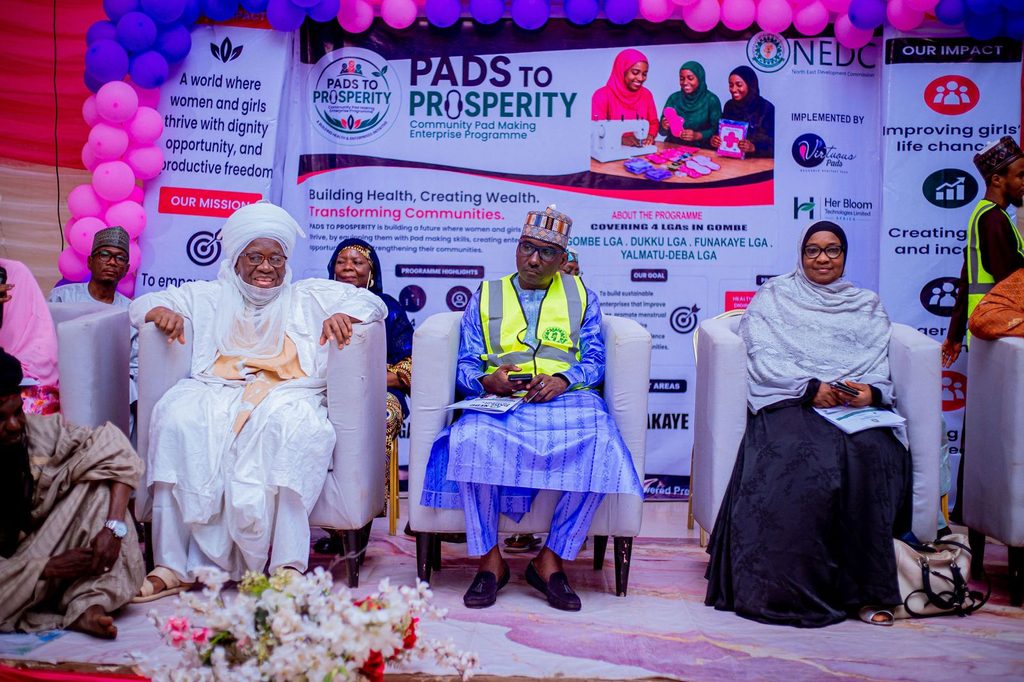
The North East Development Commission (NEDC) and Virtuous Reusable Pads have launched the Pads to Prosperity Community Pad-Making Enterprise Programme in Gombe State, an initiative designed to connect menstrual health with women’s skills development, local production and economic empowerment.
Gombe State serves as the pilot state for the programme, which is fully funded by NEDC and implemented by Virtuous Reusable Pads, with Herbloom Technologies Africa serving as the technical partner.
Built around the theme, “From Skills to Sustainable Enterprise: Building Health, Creating Wealth, Transforming Communities,” the programme is designed to move beyond the distribution of menstrual products by creating pathways for women to acquire practical production skills and develop sustainable community-based enterprises.
At the centre of the initiative is Tabitha Arenson Abimiku, Executive Director of Virtuous Reusable Pads and Consultant/Programme Lead Implementation Partner for Pads to Prosperity, who is leading the implementation of the programme and its enterprise-development strategy.
We caught up with Tabitha Arenson Abimiku to understand the thinking behind Pads to Prosperity, the decision to begin the programme in Gombe and what the initiative hopes to achieve beyond the production of reusable sanitary pads.
According to Abimiku, the programme was developed around a broader understanding of what menstrual-health interventions can achieve.
She explained that the goal is not simply to provide women and girls with menstrual products, but to create opportunities for women to develop skills that can translate into income, enterprise and greater ownership within their communities.
For Abimiku, this is what makes Pads to Prosperity different.

The model positions women not simply as beneficiaries, but as potential producers and entrepreneurs who can contribute to improving access to menstrual-health products within their communities while creating economic opportunities for themselves.
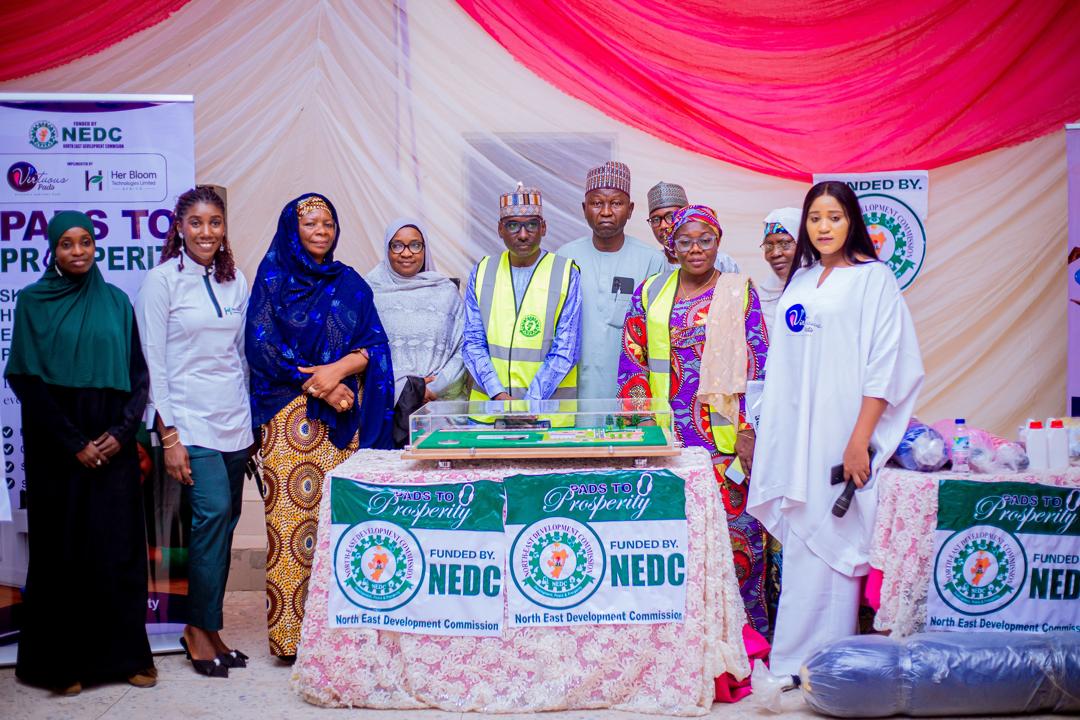
The unveiling of the architectural concepts and ground plans for four proposed Community Pad-Making Enterprise Hubs was the biggest highlight of the launch.
The proposed hubs will provide dedicated spaces for pad production, skills development and enterprise activities as the programme moves from concept into implementation.
The four hubs are planned across Gombe, Dukku, Funakaye and Yamaltu Deba Local Government Areas, forming the infrastructure for the Gombe pilot.
Speaking about the significance of the hubs, Abimiku noted that the infrastructure is an important part of ensuring that the programme can move beyond training into actual production and enterprise development.
The unveiling brought together NEDC representatives, the Virtuous Reusable Pads team, Herbloom Technologies Africa and other stakeholders involved in the initiative.
NEDC is providing full funding for the Pads to Prosperity programme as part of its broader focus on interventions that improve livelihoods and wellbeing across the North-East.
Speaking at the launch, NEDC Gombe State Coordinator, Engr. Usman Muhammad, highlighted the importance of initiatives that combine community development with sustainable economic opportunities.
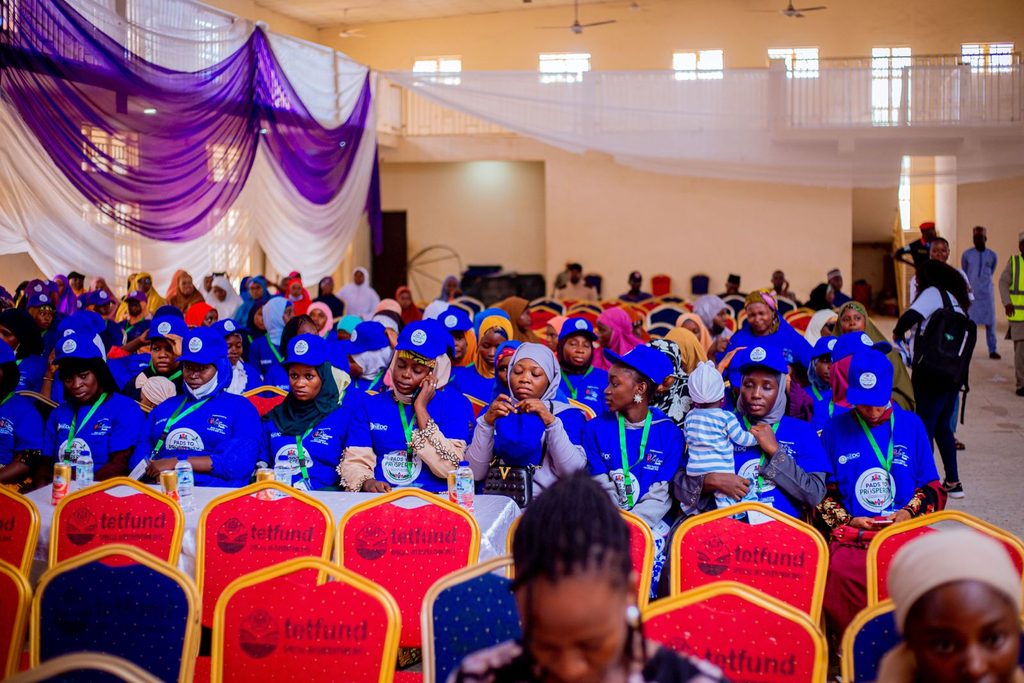
The programme brought together stakeholders from government, education, health, civil society, traditional institutions, development organisations, women and youth groups. A stakeholder investment session also explored how the initiative could be sustained and potentially expanded beyond the pilot phase.
Technical quality is another important component of the model. Mrs. Ruth Ugo of Herbloom Technologies Africa led a Quality Gate session and live demonstration focused on sanitary-pad production standards.
The session emphasised the importance of maintaining quality throughout the manufacturing process as locally produced reusable sanitary pads move from training and production into community use and potential commercial markets.
Herbloom Technologies Africa’s technical partnership is intended to strengthen the production component of the programme and support the development of reliable local manufacturing capacity.
The programme also addresses the connection between menstrual health and girls’ education. During a strategic session involving the Adolescent Girls Initiative for Learning and Empowerment (AGILE), stakeholders examined how access to appropriate menstrual products and menstrual-health support can influence girls’ ability to remain engaged in school.
The discussions also considered the menstrual-health needs of girls with special needs, reinforcing the programme’s focus on dignity and inclusion.
For Abimiku, the broader ambition is to demonstrate that menstrual health and women’s economic empowerment can be addressed through the same intervention.
A woman trained to produce reusable sanitary pads can potentially contribute to meeting a local health need while developing a source of income. A community with local production capacity can create economic activity while improving access to menstrual products.
Pads to Prosperity therefore brings together menstrual health, women’s empowerment, skills development, entrepreneurship and community economic development in one model.
With NEDC’s full funding, Virtuous Reusable Pads’ implementation leadership, technical support from Herbloom Technologies Africa and four proposed community pad-making hubs, the Gombe pilot is intended to demonstrate how menstrual health can become a pathway to dignity, skills, enterprise and sustainable community development.