For Oluwaseun Oladeji, closing the gender gap in technology is not only about teaching women how to code.
It is also about what happens after the training.
Who do they meet?
Who answers their questions?
Who tells them about the opportunity they almost missed?
Who introduces them to someone who can help move their career forward?
These questions have shaped Oladeji’s work as a community builder in Africa’s technology ecosystem.
As a Community Associate at She Code Africa, she has spent the last several years helping create spaces where women can learn, connect, access opportunities and build careers in technology. She has also worked with communities including GDG Lagos and supported technology and digital initiatives with organisations such as Wema Bank.
Her work is rooted in a simple belief: access can change the direction of someone’s career.
“While the internet is flooded with courses and tutorials, often what women genuinely need is access to the right person at the right time,” Oladeji said in a recent interview with Vanguard.
That perspective captures what makes her approach different.
There is no shortage of information online. Anyone can search for a course, watch a tutorial or download resources. But information alone does not always translate into opportunity.
Sometimes, the missing piece is a mentor.
Sometimes it is a community.
Sometimes it is a person who says, “You should apply for this.”
And sometimes it is an introduction that opens a door that would otherwise have remained closed.
This is the kind of infrastructure Oladeji has been helping to build.
Through her work with She Code Africa and other technology communities, she has contributed to programmes that connect women with mentors, speakers, professionals and practical opportunities. Her work has resulted in mentorship matches, speaking opportunities and career connections, while also supporting programmes designed to give women greater access to digital skills and professional networks.
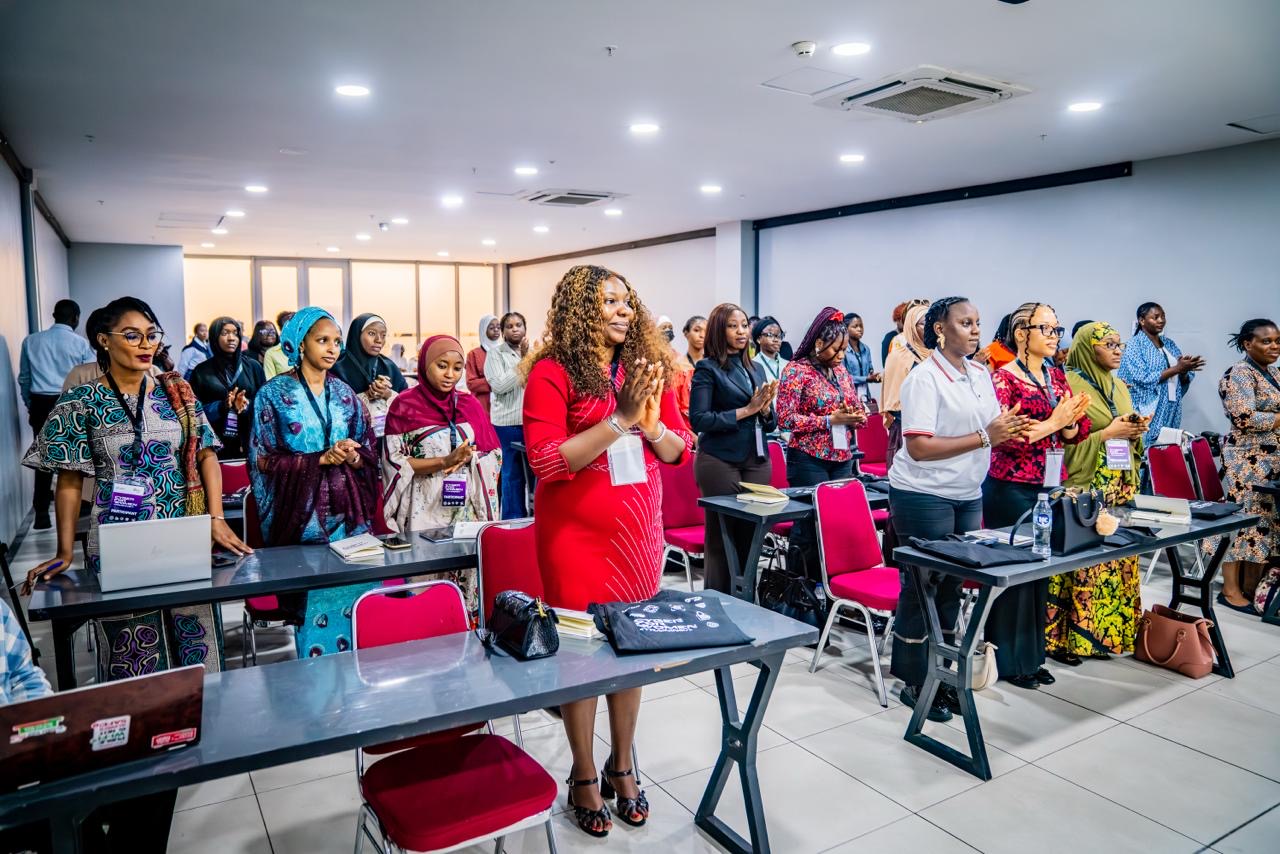
One example is the HP Digital Literacy Programme, where she coordinated volunteer operations across Oyo, Abuja and Edo States. The initiative reached more than 8,000 women, supported by a team of volunteers she helped onboard and coordinate.
But community building is rarely as straightforward as the final numbers suggest.
Behind every programme is a considerable amount of work that most participants never see: finding and coordinating partners, recruiting volunteers, understanding participant needs, organising logistics, communicating with stakeholders, gathering feedback and following up after an event or programme has ended.
Oladeji understands this side of the work particularly well.
Her experience has taught her that building a community is not simply about gathering people in one place. It is about creating an environment where people can continue to find value after the event is over.
That philosophy also shows up in her own writing.
In discussing her journey into open source, Oladeji reflected on how she once believed that contributing to open source was mainly for people who could code. Her experience challenged that assumption and pushed her to explore how people with backgrounds in community management, partnerships and coordination could also contribute.
It is a particularly relevant lesson for women entering technology.
The industry is often presented through the most visible technical roles, developers, engineers, data scientists and cybersecurity professionals. But technology ecosystems also depend on people who build communities, manage programmes, create partnerships, tell stories, organise opportunities and connect people to one another.
Oladeji has found her place in that wider ecosystem.
Her work has also extended into storytelling and documenting the journeys of women who have benefited from technology programmes. Through Afro-Tech Girls, she has written about participants whose experiences with training, internships and mentorship helped them move into new careers in technology.
These stories matter because they make the impact of community-building tangible.
A training programme may last a few weeks. A mentorship meeting may last an hour. An introduction may take only a few minutes.
But the consequences can last for years.
For Oladeji, that long-term effect is one of the most meaningful parts of the work.
She has acknowledged that community outcomes can be difficult to measure because not every result appears immediately in an organisational report. A participant finding a job, gaining confidence, meeting a mentor or discovering a new career path may happen months after the programme that helped create the opportunity.
That is why her work is ultimately about more than numbers.
It is about creating pathways.
It is about helping women see technology as a space where they belong, and then making sure they have the networks and opportunities to actually thrive there.
Her contributions have earned recognition, including Community Manager of the Year at the No-Code Tech Awards and recognition as a Rising Star by Authorrrity. Yet her own reflections on those achievements suggest that the recognition matters less than the people and communities behind it.
As Africa’s technology ecosystem continues to grow, the conversation around inclusion is also evolving.
The challenge is no longer simply getting more women interested in technology.
It is building the systems around them that make participation sustainable.
People like Oluwaseun Oladeji are helping to build those systems, one community, one connection, one opportunity and one introduction at a time.
And in an industry where access can determine who gets to move forward, that work may be just as important as the technology itself.